
UC Verde Buffalo Grass: The Low-Maintenance Lawn Everyone’s Asking Me About
Updated: Feb 18
If you’re tired of patchy grass, constant watering, and weekly mowing, you’re not alone. I made a reel about UC Verde Buffalo Grass and the questions came flying in—over 200 of them. So here’s a simple, straight-to-the-point guide answering everything you’ve been asking about this low maintenance lawn alternative.
This is what I actually use in my landscape designs across Southern California, and why it works.
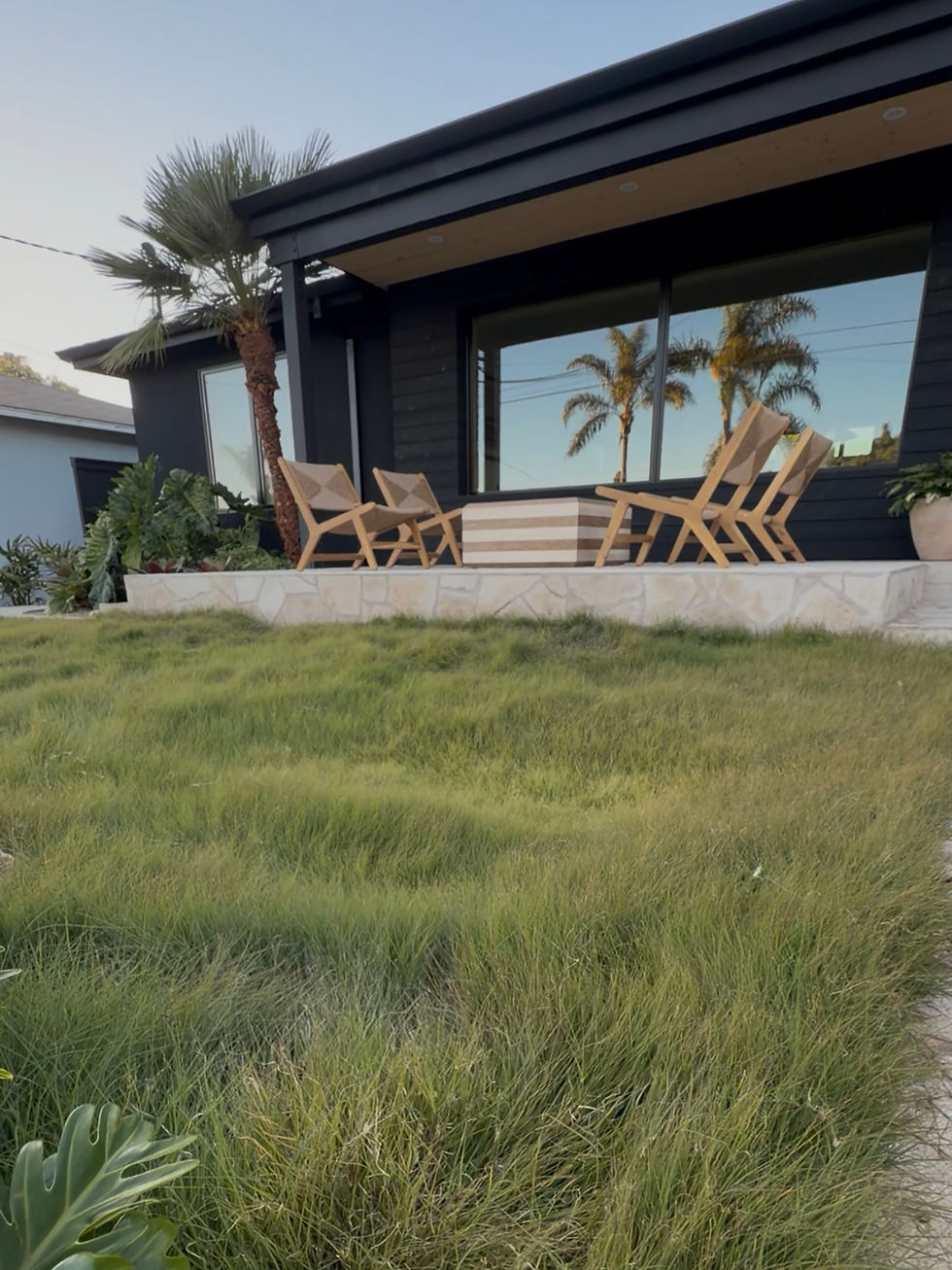
What Variety Is This?
UC Verde Buffalo Grass—that’s the specific one. Not general buffalo grass… UC Verde. It has the soft, wavy texture that caught everyone’s attention in the reel.
Watering UC Verde
UC Verde uses far less water than a traditional lawn. I irrigate it with MP Rotators because they give even coverage and help the plugs establish quickly.
At first, keep the soil lightly moist so the plugs can root in. Once it’s established, most Southern California yards only need a deep watering about once a week during the warm season.

How Well Does It Handle Shade?
This grass loves sun.It can handle light shade, but anything beyond that and it won’t thrive. If you have major shade, UC Verde probably isn’t your answer (Kurapia might be—more on that below).
Kids, Dogs, Foot Traffic—Will It Survive?
Yes, in normal family use.It’s not a sports field, but it holds up well with kids and dogs moving through the space. Sun exposure is the key to keeping it healthy.

Do You Have to Mow It?
Mowing is optional. If you leave it alone, it forms soft, natural-looking mounds. If you prefer a tidier look, mow it occasionally—every 1–2 months is more than enough.
Best Climate for UC Verde
UC Verde is a warm-season grass. It thrives in:
Southern California
Arizona
Nevada
Texas
Other warm, dry Southwestern climates
Cold winters? It will go dormant. If you live somewhere with frost or snow, this isn’t your grass.

How Long Did It Take To Look Like This?
The UC Verde in my reel is 4.5 months old from plugs. It fills in as the weather warms and settles into that soft, wavy look.
Left unmowed, it tops out around 6–8 inches—a relaxed texture that works in both coastal and cottage-style yards. Prefer it shorter? A light mow now and then keeps it tight.

If UC Verde Isn’t Right… Here Are the Other Lawn Alternatives I Use Most Often
These are the options I reach for the most in my designs today because they perform well in Southern California and in warm-season climates. Each one solves a different problem depending on sun, style, and how the yard is used.

Zoysia Tenuifolia (Korean Grass)
This is the one from my last viral reel—soft, sculptural mounds with a unique texture.
Best for:
Full sun to light shade
Modern, Coastal designs
Homeowners who want texture over “traditional lawn” look
Water: Low
Mowing: None
Traffic: Light to moderate
It’s more of a design statement than a play lawn.

Kurapia
If you want something closest to a lawn, but without the maintenance, this is the winner.
Why I use it:
Extremely low water
Dense, green groundcover
Handles foot traffic well
Works in partial shade
Can be mowed or left low
This is the most “family-friendly” of the three if you want something tough and green.

How to Choose the Right One for Your Yard
Choose UC Verde Buffalo Grass if:
You want that soft, coastal, natural look
You get plenty of sun
You want minimal mowing
You like a relaxed, organic texture
Choose Korean Grass if:
You want sculptural mounds
You want a statement lawn alternative
You have full sun or light shade
You don’t need a play lawn
Choose Kurapia if:
You want a lawn feel with way less maintenance
Your yard has mixed sun + shade
Kids and pets are part of the daily routine
You want the most durable option

Not Sure Which One Fits Your Yard?
I design landscapes across California, and I offer virtual design plans for homeowners outside my install area. If you want the right plant or lawn alternative for your climate, sunlight, and how you actually use your yard, I can help! Contact us to learn more about our services.

