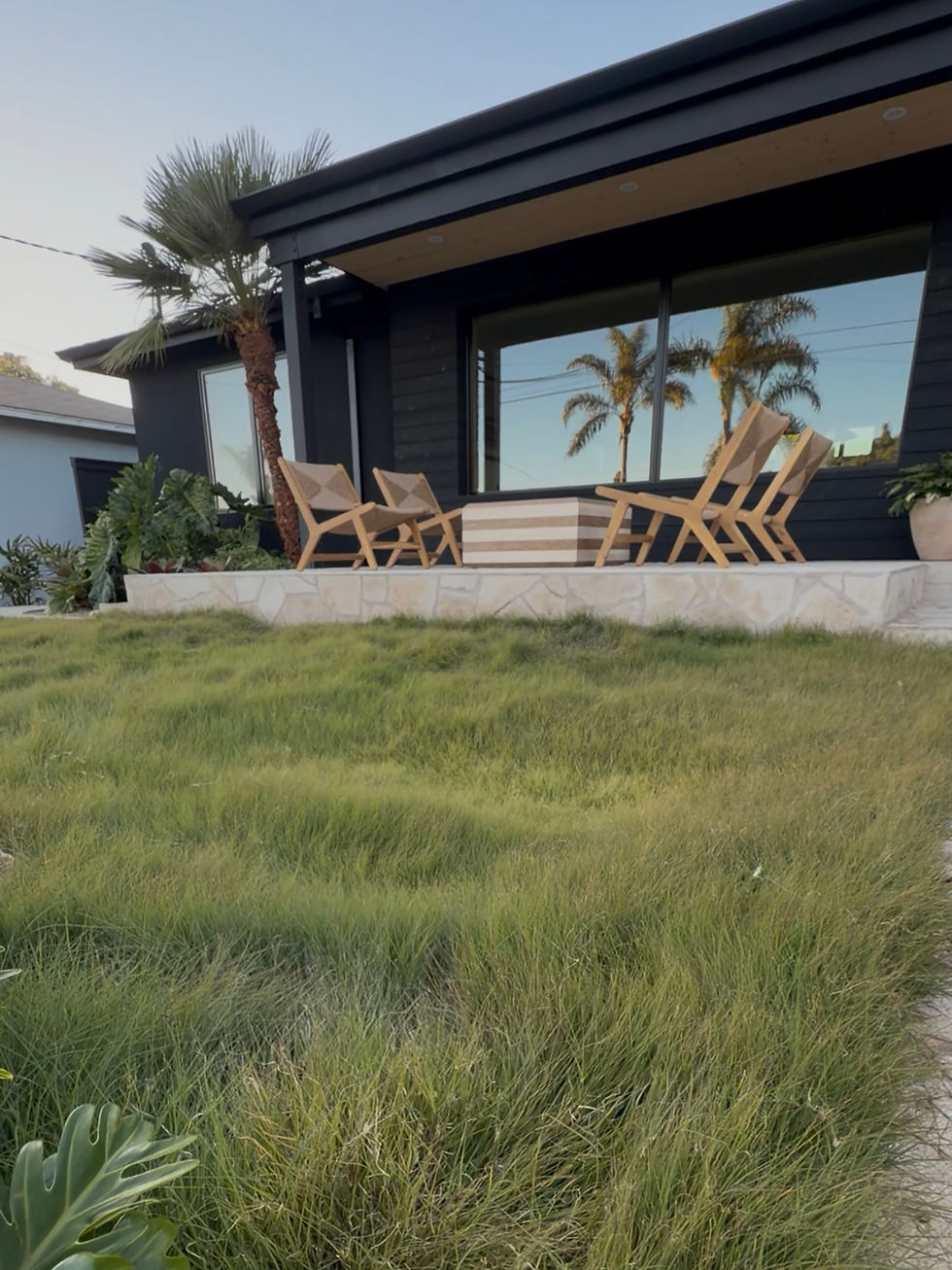
Sloped Yard Landscaping Ideas (Without Overcomplicating It)
- May 10
- 3 min read
Sloped yards are one of the most common landscape design challenges we see here in Southern California.

Most homeowners come to us saying the same thing:“I don’t know what to do with this slope.”
A backyard slope can feel too steep, too awkward, or like it needs some massive retaining wall to fix it. And when it’s your front yard, figuring out curb appeal can suddenly feel way more complicated too.
Truth is, most sloped yard landscaping projects don’t need anything overly complicated. They just need a solid plan.
Here’s how I approach sloped yard landscape design to make these spaces more usable, lower maintenance, and better looking.
1. Don’t Overcomplicate the Slope
One of the biggest mistakes I see with sloped yard landscaping is people thinking every slope needs some massive solution.

Most of the time, keeping it simple works better.
A little structure at the base, planting that fills space naturally, and a clean mulch finish can completely change how the slope feels without taking over the whole yard project.
Then you can focus on the spaces you’ll actually use.
2. Add Usable Space Where You Can
One of my favorite ways to make a slope feel more connected to the yard is by creating a usable area within it.

Sometimes that’s a simple DG pathway and a small seating area like the one pictured here.
But honestly, not every slope needs to become the main feature. A lot of times it’s better to keep the slope simple so you can focus on creating usable spaces in the rest of the yard.
3. Keep It Simple and Low Maintenance
One of the biggest mistakes I see with sloped yard landscaping is overcomplicating the planting.
Too many plant varieties, overly detailed layouts, or high-maintenance plants can make slopes harder to take care of over time.

I usually keep it simple with:
Repetition
Larger plants that fill space
Groundcovers for erosion control
Low maintenance plant material
A well-designed slope should get easier to maintain as the plants grow in.
4. Use the Right Plants for Slopes
The planting strategy is what really makes a slope come together.
For most hillside landscaping projects, I think in layers.

Structural Plants
Agaves, large shrubs, multi-branch trees, or focal plants that anchor the slope visually and take up space.
Repetition
Using drifts of the same plants keeps the slope looking clean and cohesive instead of cluttered.
Coverage
Groundcovers and spreading plants help soften the slope and assist with erosion control.
One trick we use often is planting heavier at the bottom of the slope since that’s what you see most at eye level.
5. Add Structure Where Needed
Not every slope needs a large retaining wall.

The right solution depends on how steep the slope is.
Mild slopes can often be handled with planting, boulders, or rubble (like seen above)
Moderate slopes work great with landscape tie retaining walls
Steeper slopes may need a retaining wall and drainage system (like seen below)

The key is using enough structure to support the slope without overbuilding it.
6. Mulch Works Great on Slopes

For large sloped areas, mulch is usually one of the best finish materials.
It’s:
Cost effective
Easier to install on hillsides
Helps retain moisture
Gives the slope a finished look
We often use gorilla hair mulch or forest fines because they hold in place well on slopes and blend naturally into the landscape.
For larger hillside landscaping projects, mulch can also be blown in, which makes installation much easier.
Need Help Designing a Sloped Yard?

If your front yard or backyard slope is the part of your yard you keep avoiding, you’re not alone.
Sloped yard landscaping is one of the most common things we help homeowners with in San Diego County.
We help clients design slopes that feel cleaner, easier to maintain, and actually usable.
Ready to get started? Check out our landscape design services HERE.
If you have questions or you’re ready to start planning your yard, schedule a call HERE.
We currently offer landscape design services throughout California and select nationwide projects.